


The Play Didn't Change. The Pressure Did.

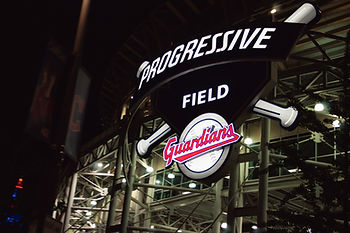
Honestly, I didn’t watch much professional baseball this season. But it’s October…and the home team was in the playoffs. And those two things meant I was watching! Go Guards! I still have a hard time not saying, “Go Tribe,” but I’ll get it right one day!
Unfortunately, our World Series hopes came to an end last night as the Guardians fell to the Tampa Bay Rays in Game 6 of the ALCS. Not the ending we were hoping for, but what a run!
And as I've watched like the team's biggest fan over the past couple of weeks, specific plays keep running through my head.
Of course, like all of us who compete and have an amazing, yet frustrating brain, it’s not the home runs. It’s not the pitching changes or even the incredible plays that remind us why these guys are among the best in the world.
It's the ordinary plays that suddenly become extraordinary challenges. (Although this isn’t
this week’s focus, isn’t it typical that we focus on the challenges?)
A routine ground ball. A throw to first. A ball that needs to be secured before the next move begins. We've seen seemingly routine plays turn into costly errors and runs that change the direction of a game. Like in Game 2, when a ground ball slipped past José Ramírez and helped the Tampa Bay Rays score three unearned runs in an inning that ultimately decided the game.
José. José. José!
That’s what has me thinking! What happens to our attention when the cost of a mistake becomes so much greater?
Does our gaze shift toward the next play a fraction of a second too early? Do we assume we know where the ball is going instead of continuing to read it? Does our desire to make the play quickly interfere with our ability to finish it?
I've also noticed how physically spent some of these players look after an inning, particularly the pitchers. Sure, they're working hard physically, but imagine the mental energy required when every pitch feels so consequential!
The fascinating thing about pressure is that it doesn't have to change the task to change our performance. The ball is still the ball. The glove is still the glove. The bases haven't moved.
But the meaning we've attached to the moment has changed. And that can change how we approach it.
Think about how many ground balls a professional infielder has fielded throughout his life. Thousands? Tens of thousands? Fielding a routine ground ball doesn't suddenly require a new level of technical ability because it's October instead of July.
But playoff pressure introduces something that isn't present in every practice repetition.
Consequences.
Suddenly, the athlete isn't simply fielding a ground ball. He's protecting a lead, preventing a run or trying to keep his team's World Series hopes alive. And when our attention shifts from executing the task to worrying about its consequences, we create an opportunity for trouble.
Researchers call one explanation for this attentional control theory. In softball coach-like terms, anxiety can make it harder to direct our attention toward what matters and keep it there. Instead of processing the information necessary to execute a skill, our attention may be pulled toward distractions, worries or potential outcomes.
Researchers have even studied where athletes look when pressure increases. In one study involving basketball players shooting free throws, increased anxiety shortened the athletes' final period of steady visual attention on the target, known as the Quiet Eye. Their shooting accuracy also declined.
The players hadn't forgotten how to shoot. Their ability to control their attention had changed.
Now consider the infielder. His eyes may move toward first base before the ball is secured. His mind may already be preparing the throw while his hands are still completing the catch.
Of course, we cannot know exactly what caused any particular error by watching a game on TV. An unexpected hop, a difficult playing surface or simple variability can all contribute…as Ramírez suggested afterward.
But the research raises a valuable question. Are we finishing the task we're doing or already thinking about the one that comes next?
This brings me to two more questions!!! Are we anticipating? Or assuming? This is an important distinction I talk about with athletes and teams.
Great performers anticipate. They use experience and information to prepare for what might happen next. An infielder anticipates where the play may develop. A goalkeeper anticipates where the shot may go. A basketball player anticipates where a teammate might move.
Anticipation is an advantage. But assuming is different. Anticipation prepares us to respond. Assumption can cause us to stop collecting information.
When we assume we know what's coming, we may act before processing what's actually happening. And pressure can make that temptation greater because we feel an urgency to get to the next action.
Think about the difference between playing quickly and rushing. Playing quickly requires us to process information and execute efficiently. Rushing can mean moving ahead before gathering the information we need. Sometimes the fastest way to make the play is to give the current action the attention it deserves.
There's another interesting piece of research that helps explain why highly skilled athletes sometimes struggle with familiar movements under pressure. It's called reinvestment or explicit monitoring. Essentially, when the stakes increase, athletes may begin consciously controlling movements that normally happen automatically.
Think about walking down a flight of stairs. You probably don't consciously instruct yourself to lift your right foot, move it forward, bend your knee and shift your weight. You just walk!
But imagine trying to think through every component of that movement while someone watches and evaluates you.
What normally happens smoothly can suddenly feel awkward.
So, pressure can interfere with performance in two different ways. We can get ahead of ourselves, moving our attention to the next action before completing the current one. Or we can get in our own way, thinking so much about how to perform a familiar skill that we interrupt its natural execution.
Either way, our attention is no longer serving the task as effectively as it could.
So how do we protect our performance when the moment feels bigger than the task? How do we keep “the ordinary” the ordinary? This is where our Three Power Moves come into play.
1. Choose Your Focus — Finish This Before That!
Give your attention to the information necessary to complete the current task. For the infielder, it might be seeing the ball into the glove before shifting attention toward the throw. For the basketball player, it might be seeing the rim rather than thinking about the score. For the student, it might be reading the entire question before rushing to an answer.
It comes back to asking ourselves, “What needs my attention NOW?” Not in five seconds. Not after this play. NOW.
It seems so simple, but pay attention to how many times you move away from this in a day (or an hour!).
2. Choose Your Response — Notice the Urgency Without Obeying It!
Pressure can create the feeling that we need to do everything faster. But feeling rushed and needing to move quickly are not the same thing! I’ve learned this lesson a million times, but the most impactful was when I was taking care of my dad. I wrote about it HERE.
When we recognize that sense of urgency, we can use a brief reset. It might be a purposeful breath, releasing unnecessary tension or simply reconnecting with our surroundings. I often encourage my clients to narrate what’s around them to bring their attention back to the present. This simple tool helps us get out of our heads and reconnect with the environment, supplying the cues and clues we need to respond appropriately!
We aren't trying to slow everything down. We don't always control the pace of the environment around us. We're creating enough space to choose the response that best serves the task.
3. Choose Your Energy — Match the Moment Without Magnifying It!
Big moments create big emotions. That's part of what makes competition exciting! But the size of the moment doesn't automatically determine the energy we need to perform the task. A routine ground ball doesn't require a superhero effort because it's the ninth inning of a playoff game. It requires the same fundamental skills that have made the athlete successful throughout the season.
Recognize your energy. Adjust what you can. Commit to the task.
This isn't just an October baseball thing! How often do we do exactly what we've been watching on the field?
We rush through conversations because we're already preparing our response. We make assumptions about what someone is going to say instead of listening. We worry so much about the outcome of a presentation that we lose track of the point we're trying to make.
As I said, count how many times you do this in a week…or an hour!
Whether you're competing for a championship, coaching from the sidelines, performing on stage, leading a meeting or taking an exam, pressure can tempt you to give your attention to everything EXCEPT the task that needs it most.
And here's the thing. We don't have to make extraordinary moments ordinary. We need to keep ordinary tasks from becoming unnecessarily complicated because the moment is extraordinary.
The Guardians' season may be over, but their playoff run reminded me of something important. Even the best performers in the world face moments when familiar tasks become difficult. And while we can look back at a costly play and wish it had gone differently, we can't assume we know what happened in the athlete's mind.
What we CAN do is learn from what we observe. The eyes. The pace. The ability to stay with the current play instead of jumping ahead to the next one.
Because when the moment gets bigger, our job isn't to make the play bigger. It's to give the ordinary play the attention it deserves. And sometimes, that's what makes an extraordinary performance possible.
The Guardians won't be playing in the World Series this year, but the lessons we can take from watching them certainly don't end with their season.
Choose your focus, choose your response and choose your energy. One play. One task. One moment at a time.
Julie
Julie Jones
Mental Performance Coach
SSB Performance
juliej@ssbperformance.com • 234-206-0946

Comments